 English
 Spanish
 French
 German
 Italian
 Chinese (Simplified)
 Japanese
 Korean
 Arabic
 Portuguese
 08045476402
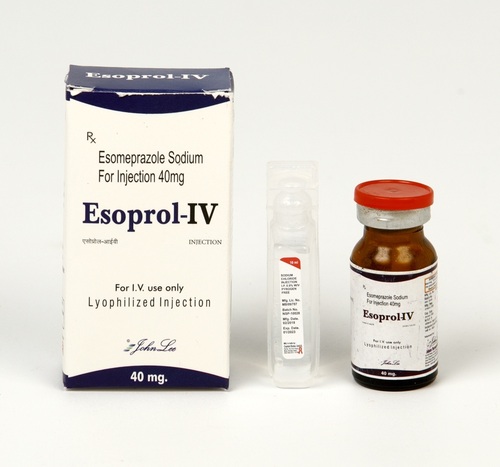
Esomeprazole Injections
105.00 INR/Box
Product Details:
- Origin of Medicine Pharmaceutical/Allopathic
- Life Span 2 years from manufacturing date
- Salt Composition Esomeprazole Sodium
- Indication Treatment of acid-related disorders
- Packaging Type Vial ampoule
- Dosage Form Parenteral
- Brand Name Esomeprazole Injection
- Click to View more
X
Esomeprazole Injections Price And Quantity
- 1000 Bottle
- 105.00 INR/Box
Esomeprazole Injections Product Specifications
- Treatment of acid-related disorders
- Adults
- 2 years from manufacturing date
- Prescription
- As directed by physician, typically 20 mg or 40 mg once daily
- Intravenous administration, slow injection or infusion
- Esomeprazole Sodium
- Pharmaceutical/Allopathic
- Available in 1 vial ampoule per pack
- Gastric Acid Suppressant / Proton Pump Inhibitor
- Usually 1 ampoule per box
- Injection
- Esomeprazole Injection
- Parenteral
- Vial ampoule
- Store below 25C, protect from light
- Esomeprazole Sodium
- Gastric Ulcer, GERD, Peptic Ulcer, Zollinger-Ellison Syndrome
- Approved for hospital use
- Intravenous (IV) only
- Headache, diarrhea, nausea, abdominal pain
- 20 mg, 40 mg per vial
- Yes, with suitable diluent
- Not to be mixed with other drugs
- Known hypersensitivity to esomeprazole or substituted benzimidazoles
- Prescription Only
- Within 1 hour
- White to off-white lyophilized powder
- 4 hours at room temperature, 12 hours in refrigerator
Esomeprazole Injections Trade Information
- MUMBAI
- 1000 Bottle Per Day
- 1 Week
- Yes
- Free samples available with shipping and taxes paid by the buyer
- 1X40 MG
- WHO GMP
Product Description
COMPOSITIONS :
Esomeprazole Sodium IV 40MG
PACKING :
1X40 MG
INDICATIONS :
The primary uses of esomeprazole are gastroesophageal reflux disease treatment and maintenance of erosive esophagitis treatment of duodenal ulcers caused by H. pylori prevention of gastric ulcers in those on chronic NSAID therapy and treatment of gastrointestinal ulcers associated with Crohn disease.
USES :
Esoprol IV Injection is a proton pump inhibitor used in the treatment of stomach ulcers Gastroesophageal reflux disease(GERD) and other acidity related disorders. It decreases the acid produced in the stomach and also helps in the healing of ulcers.
SIDE EFFECTS :
- Headache
- Nausea
- Flatulence
- Stomach pain
- Skin rash
- Swelling and redness at the injection site
- Difficulty in breathing
- Swelling of face, lips, eyelids, tongue, hands and feet
- Irregular heartbeat
- Severe diarrhea
- Unusual tiredness and weakness
- Fever
- Decreased appetite
Precise Acid Control with Rapid Onset
Esomeprazole Injection acts within an hour to effectively reduce stomach acid. It is particularly beneficial in acute settings where oral administration is not feasible, delivering swift relief for acid-related conditions. With its targeted mode of action as a proton pump inhibitor, it is trusted in hospitals for reliable patient outcomes.
Simple Preparation and Storage Instructions
This lyophilized powder must be reconstituted using a suitable diluent prior to administration. After reconstitution, the solution remains stable for 4 hours at room temperature and up to 12 hours if refrigerated. Always store vials below 25C and keep them protected from light for maximum product integrity.
FAQ's of Esomeprazole Injections:
Q: How should Esomeprazole Injection be prepared and administered?
A: The injection must be reconstituted with a suitable diluent as per the manufacturer's instructions before being administered intravenously, either as a slow injection or infusion. Administration should always be performed by a qualified healthcare professional in a clinical setting.Q: What are the main benefits of using Esomeprazole Injection?
A: Esomeprazole Injection provides rapid reduction of gastric acid within 1 hour, making it valuable for treating acute episodes of acid-related disorders in patients unable to take oral medications. It is approved for indications such as gastric ulcer, GERD, peptic ulcer, and Zollinger-Ellison syndrome.Q: When is Esomeprazole Injection recommended over oral tablets?
A: This injectable form is recommended in situations where oral medication is not possible, such as during surgery, in critically ill patients, or when rapid acid suppression is needed. Hospital use is preferred for acute management under close supervision.Q: Where should Esomeprazole Injection be stored before and after reconstitution?
A: Before reconstitution, store the unopened vials below 25C and protect from light. After reconstitution, the solution may be kept for up to 4 hours at room temperature or up to 12 hours when refrigerated, ensuring proper labeling of time and storage conditions.Q: What precautions should be taken with Esomeprazole Injection regarding drug compatibility?
A: Esomeprazole Injection must not be mixed or administered simultaneously with other drugs in the same line or syringe. It should be reconstituted and given only as directed to avoid adverse interactions.Q: Who should avoid Esomeprazole Injection?
A: Individuals with known hypersensitivity to esomeprazole or other substituted benzimidazoles should not use this product. Always inform your healthcare provider of any existing allergies before administration.Q: What are the possible side effects of Esomeprazole Injection?
A: Possible side effects include headache, nausea, abdominal pain, and diarrhea. If you experience severe or persistent symptoms, notify your healthcare provider immediately.Tell us about your requirement

Price:
Quantity
Select Unit
- 50
- 100
- 200
- 250
- 500
- 1000+
Additional detail
Mobile number
Email

Other Products in 'Pharmaceutical Medicines' category




Contact Details

- Office No.22 to 25, 2nd Floor, 72/78, Chapsey Building, Ladwadi, Shamaldas Gandhi Marg, Princess Street,Mumbai - 400002, Maharashtra, India
- Phone : 08045476402
AMBICA PHARMA
GST : 27AGKPJ8183H1ZY
GST : 27AGKPJ8183H1ZY

- Mr Vikram K Jain (Director)
- Mobile : 08045476402
- Send Inquiry
 Send Inquiry
 Send Inquiry
 Send SMS
 Call Me Free
AMBICA PHARMA
All Rights Reserved.(Terms of Use)
Developed and Managed by Infocom Network Private Limited.
Developed and Managed by Infocom Network Private Limited.

